
What Is a GFCI, and Why Does Your Report Flag It?
GFCI outlets are the single most common electrical item on a home inspection report. What they do, where they belong, and how to test one in ten seconds.
AZ Home Inspection ServicesSeptember 4, 20266 min read
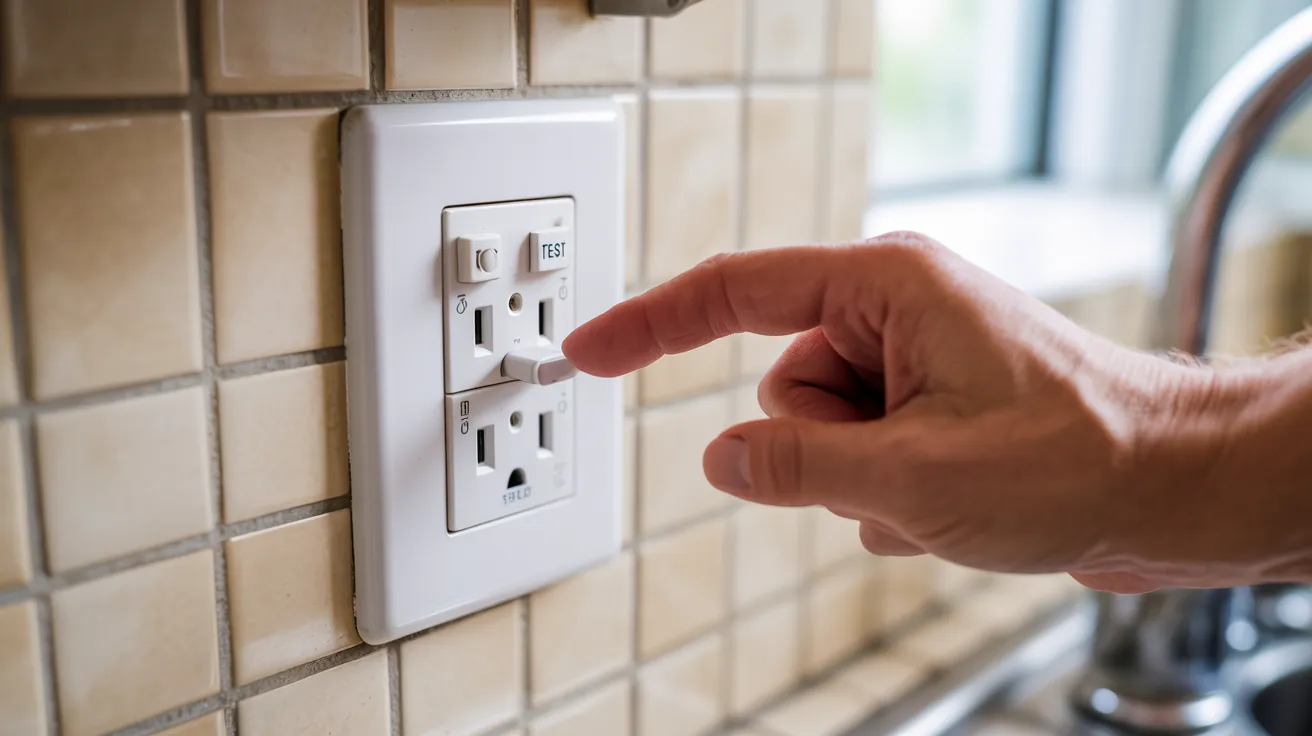
If you have read a home inspection report, you have read the letters GFCI. They turn up more than almost anything else, usually in the kitchen, the bathrooms, the garage, the laundry and anywhere outdoors. And they usually turn up as a recommendation rather than a crisis, which is exactly why they get skimmed past.
They are worth thirty seconds of your attention, because this is the rare inspection finding that is both genuinely about your safety and genuinely cheap to fix.
What a GFCI actually does
GFCI stands for Ground Fault Circuit Interrupter.
Electricity that goes out to a device is supposed to come back. A GFCI watches both directions at once and compares them. When the amount coming back does not match the amount going out, some current has found another path — and in a house, the other path is very often a person, or standing water, or both.
When the device detects that mismatch, it cuts the circuit. Not eventually: in a fraction of a second, and at a current far below the level that stops a heart. That is the entire job. It is a small, boring device whose only purpose is to notice something has gone wrong faster than you can.
A GFCI is not the same thing as a circuit breaker in your panel. A breaker protects the wiring from carrying more current than it safely can, which prevents fires. A GFCI protects people from a current that is escaping the circuit. Both matter, and one does not substitute for the other.
You may also see AFCI in a report — Arc Fault Circuit Interrupter. Different device, different job: it looks for the electrical signature of arcing, which starts fires. Reports treat them separately because they protect against different things.
GFCI or GFI — is there a difference?
No. They are the same device under two names. GFI is the older abbreviation and GFCI is the current one. Electricians, manufacturers, inspectors and reports all use both. If your report says one and the box in your hardware store says the other, you are looking at the same thing.
Where they belong
The guiding idea is simple: anywhere water and electricity can plausibly meet. In practice that means kitchen counter receptacles, bathrooms, laundry areas, garages, unfinished basements, outdoor receptacles, and anything serving a pool or spa.
The scope has expanded steadily over the decades, which is why the age of a house matters so much here. Requirements were narrower in the 1970s than the 1990s, and narrower in the 1990s than today. A home built decades ago and never updated will almost certainly show gaps against current expectations — not because anything was done wrong at the time, but because the standard moved.
This is why GFCI notes cluster in older housing stock. Across the Valley the pattern shows up clearly: the mid-century stock in Tempe and central Phoenix produces far more of these findings than the newer production housing in Gilbert or Chandler.
Why an inspector flags it even when it is "allowed"
This is the part that causes the most confusion, so it is worth being direct about it.
Existing wiring in an older home is generally permitted to remain as it was originally installed. Nobody is obliged to rewire a house every time a standard changes. So a buyer sometimes reads a GFCI note and reasonably asks: if it was legal when it was built, why is it in my report?
Because a home inspection reports on the condition and safety of the house as it stands today, not on whether it complied with the rules of the year it was built. Under the ASHI Standards of Practice, an inspector examines the electrical system — the service entrance and panels, branch circuits, connected devices and fixtures, smoke and carbon monoxide detectors, and whether outlets are GFCI-protected — and reports what is there.
A missing GFCI beside a kitchen sink is a real hazard whether or not it was required in 1978. Your report tells you it is there. What you do about it is your decision, made with the information rather than without it.
How to test one yourself, in ten seconds
Every GFCI receptacle has two small buttons, usually marked TEST and RESET.
- Plug something simple into the outlet — a lamp is ideal, because you can see it.
- Press TEST. You should hear a click, and the lamp should go out.
- Press RESET. The lamp should come back on.
That is the whole test. If pressing TEST does nothing, or if RESET will not stay in, the device has failed and needs replacing. GFCIs are electronic and they do wear out, so a device that has been in a wall for fifteen years is not guaranteed to still work just because it still passes power.
Worth knowing: one GFCI can protect several ordinary outlets downstream of it. So if a bathroom outlet has no buttons of its own, it may still be protected by a GFCI elsewhere on the circuit — often in the garage or an adjacent bathroom. An inspector tests for actual protection at the outlet, not just for the presence of a button, which is why a report can say an outlet is protected even when it has no buttons on it.
Test them a couple of times a year. It takes less time than reading this paragraph.
What it costs to fix
This is the good news, and the reason GFCI findings are worth acting on rather than negotiating over.
Replacing a failed GFCI or adding one where it is missing is normally among the least expensive items on any inspection report — a small device and a short visit from an electrician. Compare that to a roof, an air handler, or a foundation note, and it is not close.
If you are going to act on exactly one electrical item from your report, act on this one. It is the cheapest safety improvement in the document.
Where this shows up in your report
In an AZHI report, electrical findings arrive with a photograph of the actual outlet, so you know which one, in which room. You can filter the report down to just the safety items, and the defect summary can be copied straight into a repair addendum if you are still under contract.
And if you want it explained rather than read, that is what the walkthrough at the end of the inspection is for.
Buying in the Valley and want the electrical system looked at properly? Get a quote, or call 480-805-2025.
Need an inspection in the Valley?
Bob Clardy has performed more than 10,000 inspections across the Phoenix metro. Residential inspections start at $285, report delivered on-site.
Frequently asked
What does GFCI stand for?
Ground Fault Circuit Interrupter. It is a device that watches the electricity flowing out to whatever is plugged in and compares it to the electricity coming back. If the two do not match, current is escaping somewhere it should not be, and the GFCI cuts power in a fraction of a second.
What is the difference between GFCI and GFI?
Nothing. They are two names for the same device. GFI is the older, shorter term and GFCI is the current one, so you will see both used interchangeably by electricians, manufacturers and inspection reports.
Where are GFCI outlets required?
The short version is: anywhere water and electricity can meet. That generally means kitchens, bathrooms, laundry areas, garages, unfinished basements, outdoor receptacles and anything near a pool or spa. Requirements have expanded over the decades, so an older home is very unlikely to match current expectations.
How do I test a GFCI outlet?
Press the TEST button. It should click and cut power to that outlet. Plug something in to confirm the power is actually off, then press RESET to restore it. If pressing TEST does nothing, or if RESET will not hold, the device has failed and should be replaced.
Does an older home have to be brought up to current GFCI requirements?
Generally no — existing wiring is usually allowed to remain as it was permitted. But a home inspection reports on safety, not just on permitting, so missing GFCI protection near water is noted regardless of the home's age. Adding it is normally one of the cheapest safety upgrades available.
- electrical
- understanding your report
- home safety