
How to Tell if a Home Has a Mold Problem
Mold in a dry climate hides where the water is, not where the weather is. Where it actually turns up in Arizona homes, and when testing is worth doing.
AZ Home Inspection ServicesSeptember 4, 20266 min read
There is a comfortable assumption about mold in the Sonoran Desert: it is a wet-climate problem, and we do not have a wet climate.
It is a reasonable thing to assume and it is wrong, for a straightforward reason. Mold does not respond to weather. It responds to water. And water indoors — from a supply line, a drain, a roof penetration, a condensate pan, a failed water heater — is exactly as wet in Phoenix in June as it is anywhere else on earth. The desert outside the wall has no vote in what happens inside it.
What the dry climate genuinely does change is where mold turns up and how long it stays hidden. Here is where it actually is.
Where mold hides in an Arizona home
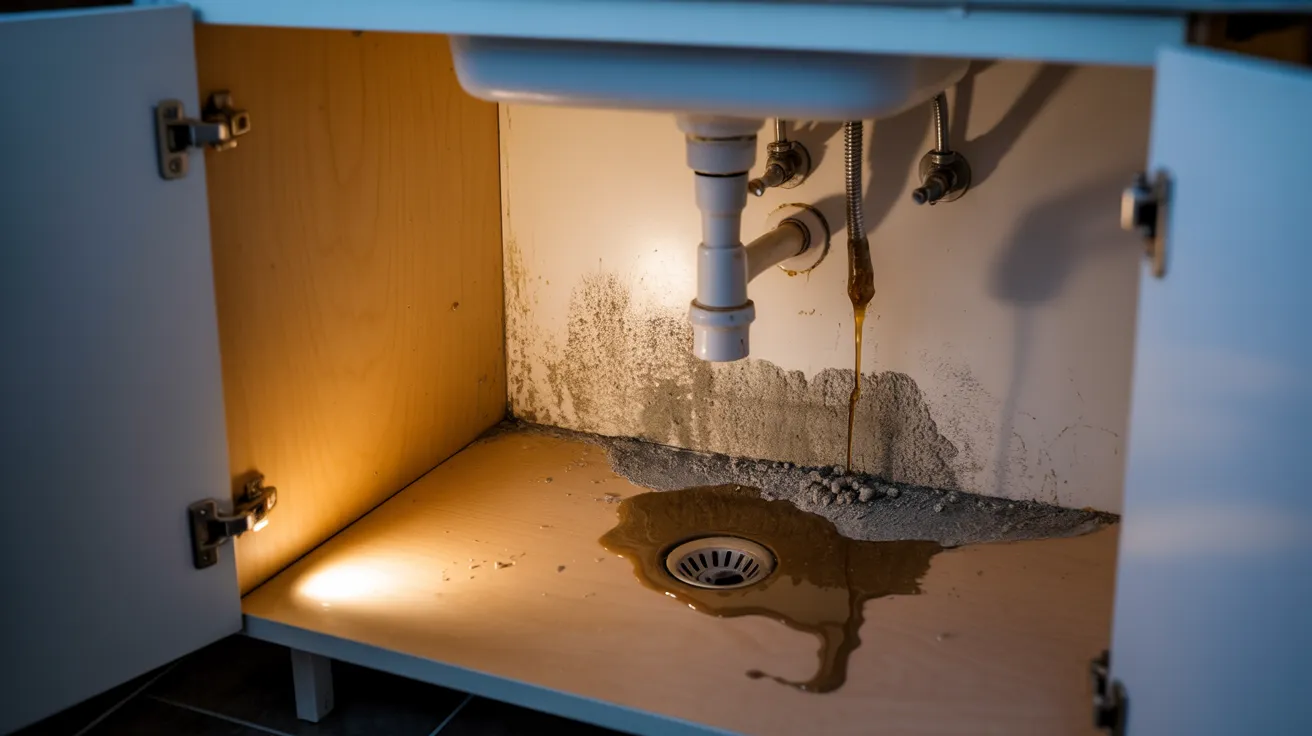
Under sinks. The single most common location, and it is not close. A supply-line connection or a drain fitting seeps slowly into a particleboard cabinet base, the doors stay shut, nobody looks in there for two years, and the base quietly turns to sponge. This is the first cabinet any inspector opens.
Around the air conditioning. This is the specifically regional one, and it is the one homeowners least expect. An air conditioner works by condensing water out of the air — that is not a malfunction, that is the mechanism. All of that water is supposed to leave through a condensate drain. When that drain clogs, or the secondary pan rusts through, or the line was routed badly, the water goes somewhere else: into a ceiling, down a wall cavity, or into an attic. In a climate where the AC runs relentlessly for months, that is a lot of water with somewhere to go.
Behind water heaters. Often in a garage or a closet, often on a slab, often out of sight behind stored boxes. A slow tank weep can run for a long time before anyone notices.
At roof penetrations. Vents, flashings, skylights and swamp-cooler penetrations. Arizona goes months without meaningful rain and then gets monsoon storms that arrive sideways. A flashing detail that survives light rain can fail badly under wind-driven water, and the interior evidence appears well away from the actual entry point.
Windows and exterior walls after monsoon. Water gets in during a storm, the desert dries the outside surface in a day, and the moisture stays trapped behind the finish where nothing dries it.
Vacant homes. A house that has sat empty through a Phoenix summer with the air conditioning off is its own category. No conditioning, no circulation, and any existing moisture problem gets months of undisturbed time.
What you can actually notice yourself
Visible growth is a late symptom. By the time there is something to look at, the water has usually been there a while. The earlier signals are all about moisture, not mold:
- A persistent musty smell, particularly one that is stronger in one room, or stronger when the AC first kicks on.
- Staining, bubbling or bulging on a wall or ceiling — often tea-coloured, often with a defined tide line.
- Warped or lifting flooring, especially at the base of a cabinet run or along one wall.
- A cabinet base that feels soft or has darkened at the back edge.
- Windows that fog on the inside in a climate where that should not be happening.
- Anything that smells damp in a house that should not have anything damp in it.
That last one deserves weight. Smell is a genuinely good instrument, and people routinely talk themselves out of trusting it during a showing.
What an inspection can and cannot tell you
A home inspection is a visual examination. An inspector reports on what can be seen and what can be reached, and does not cut open walls.
That said, visual does not mean superficial. AZHI carries moisture readers as standard equipment, and a moisture meter finds elevated moisture behind a finish that looks completely normal. That is often the whole game: the wall looks fine, the reading says otherwise, and now you know where to look.
What an inspection can do is find the conditions — the active drip, the clogged condensate line, the stained ceiling, the reading that does not match the room. Those conditions are what matter, because they are what caused the problem and what will cause it again.
Mold testing is a separate service, added to an inspection when there is a reason for it. It tells you what is present and where. The inspection tells you why.
Worth knowing: every AZHI inspection includes MoldSafe coverage as standard, which covers remediation of visible mold growth that may occur after the home inspection for 90 days. That is included at no extra cost, not an upsell.
When testing is actually worth it
Not every house needs a mold test, and it is not honest to suggest otherwise. It is worth doing when there is a reason:
- There is a musty smell you cannot place.
- There is visible staining, and nobody can tell you what caused it or whether it was fixed.
- The seller has disclosed a past leak or a roof repair.
- The home has been vacant for a stretch, particularly over a summer.
- The air conditioning has been off, or the condensate drain shows signs of having backed up.
- Someone moving in has asthma or a respiratory condition and you would rather know than assume.
If none of those apply and the house is dry, a routine test on every purchase is usually unnecessary. An inspector who tells you every home needs one is selling, not inspecting.
If you find something: fix the water first
The most expensive mistake in this whole subject is remediating the growth and not the cause.
Removing mold from a wall while the pipe behind it is still dripping is not a repair, it is a delay — you have spent money to reset a clock. Find and fix the moisture source first. Then deal with the growth. In that order, always.
Two other things worth saying plainly. First, mold in a home is a building problem, and this article is about buildings — health questions belong with a doctor, not an inspector or a website. Second, the scary end of the internet on this topic is very loud and very unreliable; the useful response to a suspicion is a moisture reading, not a search result.
Getting it looked at
If you are buying in the Valley and something smells off — literally — that is worth a phone call before you are past your inspection period, not after.
Mold testing and inspection can be added to any AZHI inspection, and indoor air quality testing is available alongside it. Every finding arrives in the report with a photograph of the actual location, so you can hand it to a remediation contractor and get a real quote rather than a guess.
Get a quote, or call 480-805-2025 and describe what you are seeing.
Need an inspection in the Valley?
Bob Clardy has performed more than 10,000 inspections across the Phoenix metro. Residential inspections start at $285, report delivered on-site.
Frequently asked
Can you get mold in a dry climate like Arizona?
Yes. Mold does not need humid weather, it needs a water source and a surface to grow on — and those exist indoors regardless of what the desert is doing outside. A slow supply-line drip under a sink is exactly as wet in Phoenix as it is anywhere else.
How do I know if I have mold if I cannot see any?
You often cannot know by looking, which is the whole problem. Visible growth is a late symptom. The earlier signals are moisture-related: a persistent musty smell, staining or bubbling on a wall or ceiling, warped flooring, or a moisture reading that is elevated behind a finish that looks fine.
Is mold testing included in a standard home inspection?
No. Mold testing is a separate service that can be added to any inspection. What every AZHI inspection does include is MoldSafe coverage, which covers remediation of visible mold growth that may occur after the home inspection for 90 days.
Should I test for mold before buying a house?
It is worth doing when there is a reason to — a musty smell, visible staining, a known past leak, a long-vacant property, or a home where the air conditioning has been off through a summer. Testing every house as a matter of routine is usually unnecessary.
What should I do if I find mold?
Find the water first. Remediation without fixing the moisture source is temporary by definition, because the conditions that grew it are still there. Identify and repair the leak or the condensation problem, then deal with the growth itself.
- mold
- indoor air quality
- buying a home